
 Best Platforms
 Live Odds








7 Research Mistakes That Misread South Carolina Senate Odds
Fix South Carolina Senate candidate odds: confirm nominees via scvotes.gov, match contract definitions, avoid stale Gamma quotes, read settlement rules.
You’re trying to put a position on the South Carolina Senate race, but every site seems to be telling you a different story. One market lists two named candidates, another prices the party, and a third looks “unchanged” even after news hits.
If you pick the wrong contract or trust the wrong feed, you can end up paying for movement that isn’t real, hedging against the wrong outcome, or getting stuck holding through an unexpected settlement timeline. This troubleshooter walks you through the seven research mistakes that most often cause those misreads—and the quick checks that fix them.
Researching the wrong race
Odds research breaks the moment you keep using the pre-July 2026 “South Carolina Senate candidate” frame. After Sen. Lindsey Graham died in July 2026, the GOP nominee question stopped being “who wins the regular primary?” and became “who survives a replacement process on a compressed calendar.”
Trigger and timeline
The key reset: Darline Graham was appointed to fill the vacancy on July 13, 2026, and took the oath of office on July 14. That appointment made her the sitting senator, not automatically the November nominee.
South Carolina then scheduled a special primary—an off-schedule party primary triggered by an unusual event (like a nominee’s death) and used to pick a replacement nominee—for August 11, 2026, with a potential runoff—a follow-up election between the top finishers when nobody hits the required threshold—on August 25, 2026. The Associated Press later described Graham as having won the GOP nomination through that special primary/runoff process.
If you’re researching “the candidate,” you have to separate three roles that can diverge: appointed incumbent (July), party nominee (August), and general-election contender (November).
UOCAVA runoff mechanics
That August calendar has a procedural wrinkle that markets can misprice if you ignore it: UOCAVA voters—military and overseas voters covered by the Uniformed and Overseas Citizens Absentee Voting Act—vote on timelines that don’t wait for an in-state runoff.
So South Carolina issues those voters an IRV ballot in the UOCAVA context—an Instant Runoff Voting ballot that lets them rank candidates now so their preferences can be applied later if a runoff happens. In other words, the state planned for the runoff risk up front.
If you see odds that act like August 11 “locks” the nominee with no runoff path, you may be looking at someone researching the wrong race definition, not new information. For the official mechanics, see SC Votes’ guidance on military and overseas citizens.
Treating FEC as ballot
Use this checklist before you treat an FEC page as “the” South Carolina Senate candidate list.
-
Read the table label like a warning. The Federal Election Commission (FEC) “Candidate financial totals” table is limited to candidates who registered and filed a financial report, and it may not include the most recently submitted filings.
-
Classify what you’re looking at. That table is fundraising/reporting metadata (who filed federally), not a statement that someone has ballot access (officially listed for voters) or is a party’s nominee.
-
Switch to the source that controls ballots. The FEC page itself points out that state laws and procedures govern who appears on election ballots and says to contact the state election office for details—so use the South Carolina Election Commission (scvotes.gov) for ballot reality.
-
Cross-check before you trade. If a name is on an FEC totals table but missing from state election materials, treat that as “filed paperwork,” not “is the candidate.” (See the FEC’s South Carolina 2026 page for the table limitations language.)
Not confirming nominees
Nominee mistakes usually come from trusting one list. Do a quick cross-check that uses a ballot authority plus independent reporting.
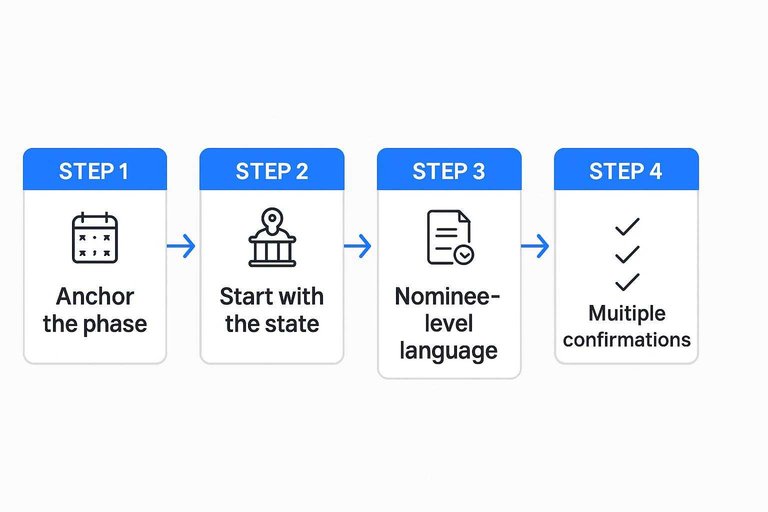
- Anchor the phase. Write down “general election” and the date you’re trading against (many markets end on Nov 3, 2026), so you don’t accidentally validate a primary-only field.
- Start with the state, not a spreadsheet. Go to scvotes.gov and pull the state’s 2026 general-election materials; treat that as your “ballot reality.” Even the early-voting page is concrete: Oct 19–Oct 31, 8:30 a.m.–6:00 p.m. (closed Sunday) — see SC Votes early voting details.
- Look for nominee-level language. You want “certified,” “qualified,” “sample ballot,” or the official candidate list—not “filed” or “registered.”
- Require multiple independent confirmations. Use the same mindset Kalshi uses for settlement: don’t accept a single call; wait for four major outlets to converge.
- On market pages, trust outcomes—not narratives. For example, Polymarket’s SC Senate winner market lists only Darline Graham Nordone ® and Annie Andrews (D) as outcomes, and its page says the “Experimental AI-generated summary” plays no role in resolution.
Comparing different questions
Before you compare “odds,” write down the contract’s Outcome definition—the exact thing it pays on (for example, “a specific candidate wins” vs “a party wins the seat”). If two markets don’t share the same outcome definition, their prices are not comparable.
| Contract type | Pays if… | Safe to compare with | Common apples-to-oranges mistake |
|---|---|---|---|
| Candidate wins (general) | Named person wins in November | Same candidate, same election | Comparing vs party-win price |
| Party wins seat (general) | Any party nominee wins in November | Same party-win seat contract | Treating it as a candidate bet |
| Candidate wins nomination (special primary) | Named person becomes nominee | Same nominee market | Comparing vs November winner |
| Party wins nomination (special primary) | Party selects its nominee | Same party-nominee question | Mistaking it for seat control |
A concrete tell: Kalshi’s South Carolina Senate winner event (SENATESC-26) is a two-outcome contract, and TickerTracker shows $2,339,212 in total volume across those outcomes—structure that usually signals “seat/party-winner,” not a “south carolina senate candidate”-specific payout.
Don’t “average” these into one view. Label them, then compare only within the same row.
Believing stale odds
Before you treat a “South Carolina Senate candidate” price as a real move, run this market-quality sanity check.
-
Check the timestamp first. If the page doesn’t show when the number was last updated, you’re looking at an undated snapshot. MarketsPrediction, for example, puts a visible “Last updated” timestamp on its Live Data (e.g., October 12, 2026 at 7:43 AM UTC), so you can tell whether you’re reacting to something current or just finally refreshed.
-
Identify whether the feed is delayed by design. If you’re pulling Polymarket prices from the Gamma API, don’t treat
outcomePricesas “live odds”—the Polymarket SDK documentation flags that field as stale/lagging and points you to the CLOB API midpoint for live trading. -
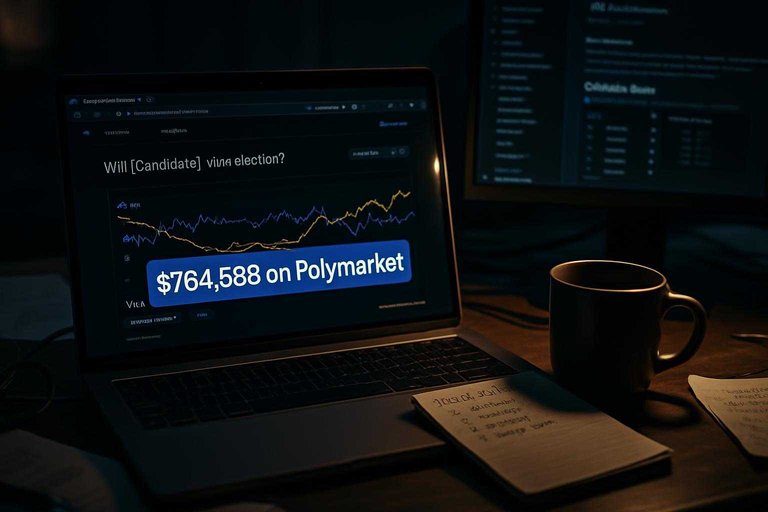
Read volume and liquidity like constraints, not trivia. Volume and liquidity (market activity and available depth; low values can make prices easier to move and harder to interpret as consensus) tell you whether a print is meaningful. Even a single market page’s displayed volume—like $764,588 on Polymarket’s South Carolina Senate winner market—changes how seriously you take a sudden tick.
-
Look for depth, not just the last price. If you can’t see order-book depth (how much can trade near the current price), you can’t tell whether the “move” survives real size.
-
Cross-check the same question across venues. Tools like OmniPred (which matches equivalent Kalshi/Polymarket markets and surfaces divergences) help you spot when one “move” is just a lagging feed.
Reading Gamma as live
Gamma API (Polymarket’s metadata/indexing endpoint that returns cached market fields) is built for describing markets, not for giving you a tradeable “right now” quote. Its price fields are easy for dashboards and aggregators to display, but they’re snapshots—not the order book you’d actually hit.
If you want the price you could actually trade, pull it from the CLOB API (the central limit order book endpoint with the live bids and asks). The clean “now” number is the order book midpoint: take the best bid and best ask and average them; if either side is missing, you don’t have a real two-sided market.
Make freshness explicit. If your feed shows a visible “Last updated” time, treat the number as “as of that timestamp” until you’ve verified the CLOB midpoint right now.
Skipping settlement rules
Market resolution/settlement—the platform’s official determination of the winning outcome under the market’s written rules, which can occur later than the public “call”—is where a lot of “south carolina senate candidate” research quietly breaks.
- Audit the trigger, not the headline. Don’t trade as if “called on TV” is the settlement event. Find the exact rule that tells you what evidence counts and who decides.
- Treat recounts and lawsuits as a timing risk. Kalshi says its election markets settle only after at least four of eight major news organizations (including the AP) call the race with none disagreeing—and if there’s a recount or legal challenge, the market can stay open until the winner is sworn in.
- Click past the summary. The decisive edge cases live in View full rules, not the on-page summary.
- Ignore editorial overlays. Kalshi also states its race “ratings” are determined solely by trader prices, with no staff editorial input—useful context, but not a settlement mechanism.
Do this audit before you size a position; the contract can stay unresolved past election night if the rules require waiting.
Trade the right question first
When South Carolina Senate odds disagree, assume you’re looking at different questions—or a stale quote—until you prove otherwise. Start by writing down the contract’s outcome definition and the election phase it settles on, then verify the actual nominee/ballot reality via the state election materials and independent confirmations (not an FEC totals table). Only treat a price move as “real” if it’s timestamped and, for Polymarket, matches what the live CLOB order book is quoting—not a cached Gamma snapshot. Before you size up, read the full settlement rules so you’re not paying for a headline while the contract can legally stay open through recounts, challenges, or even until a swearing-in.
Frequently Asked Questions
- When do South Carolina Senate prediction markets actually settle—on election night or after certification?
- Settlement is controlled by the market’s written rules, not the TV “call.” For example, Kalshi says its election markets settle only after at least four of eight major news organizations call the race with none disagreeing, and recounts/lawsuits can delay resolution until later.
- What dates should I anchor to when I’m tracking a South Carolina Senate candidate for the 2026 general election?
- Use the state’s election calendar as your timeline anchor: South Carolina’s Election Commission lists early voting for the 2026 statewide general election as Monday, October 19 through Saturday, October 31 (8:30 a.m.–6:00 p.m., closed Sunday). Then verify your market’s end date and outcome definition against that phase of the race.
- How can I tell if two sites are showing the same South Carolina Senate market or two different questions?
- Match markets by their outcome definition (candidate-wins vs party-wins vs nominee-selection) before you compare prices. Tools like OmniPred explicitly match equivalent Kalshi and Polymarket markets and surface divergences, including a live snapshot of 503 arbitrage opportunities on its homepage.
- What’s the fastest way to compare South Carolina Senate candidate odds across platforms without mixing stale timestamps?
- Use a dashboard that shows prices and a visible “last updated” timestamp so you know what moment the quote represents. MarketsPrediction’s Live Data section displays a “Last updated” time and publishes platform-level stats like “Volume (24 h)” and “Total Liquidity,” which helps you sanity-check whether a move is real activity or a lagging refresh.
- Do I need to be a U.S. resident to use MarketsPrediction to track South Carolina Senate candidate markets and promo offers?
- MarketsPrediction’s promo tiles state you must be 18 or older and have a legal U.S. residential address within the 50 states, D.C., or U.S. territories, and they include a “Trading involves risk” warning. If you don’t meet that eligibility, use it for market discovery and rules research rather than relying on offers.