
 Best Platforms
 Live Odds








7 Michigan Senate Primary Prediction Markets to Watch in 2026
A curated collection of Michigan Senate primary prediction markets to monitor in 2026 — what changed in prediction markets, how to read moves and liquidity, where each platform fits (Kalshi/PredictIt/Polymarket/Manifold/Hypermind/Metaculus), and the common ways markets can mislead you.
Trying to follow a Senate primary with polls alone can feel like watching yesterday’s weather report. By the time a headline lands, the underlying expectations may have already shifted—quietly, and for reasons that aren’t obvious.
This collection shows you which Michigan Senate primary prediction markets are worth keeping on your radar in 2026 and how to read them without overreacting. You’ll get a quick watchlist, plus platform-by-platform guidance on contract fit, liquidity, fees, hype cycles, and the failure modes that can trick even attentive observers.
Why prediction markets
Michigan’s 2026 Senate primary will be about uncertainty, not vibes. Candidate fields shift, coalitions splinter, and turnout math bites harder than most people expect.
Prediction markets matter because they force a single number onto messy information. They also show you when confident money shows up, and when nobody cares.
What changed lately
State-primary contracts got easier to trade, then harder to trust. Liquidity improved on some venues, while access limits pushed other traders to the sidelines.
Contract design also tightened up. Better wording reduced “who wins?” confusion, but more edge cases still sneak in.
Reliability now depends less on the headline price and more on the market’s structure.
Best use cases
Markets help when polling is late, scarce, or easily whipsawed. They struggle when the rules, the field, or the settlement line is fuzzy.
- Late-breaking scandal reprices faster than fieldwork
- Low-info primaries reveal attention and conviction
- Turnout surprises show up as steady drift
- Fragmented fields expose vote-splitting risk
- Ambiguous races punish “close enough” bets
Use markets to track probability shifts, not to crown a winner.
Reading market moves
Don’t treat every tick as news. Read the tape like a market, not like a scoreboard.
- Check the spread first; wide spreads mean weak signal.
- Scan volume next; moves without volume are often noise.
- Compare price action to the news; overreactions often mean fade.
- Watch time-to-expiry; late moves carry more information.
- Cross-check the contract terms; “wins primary” is not “wins nomination.”
If the spread is wide and volume is thin, you’re watching vibes with a price tag.
Common failure modes
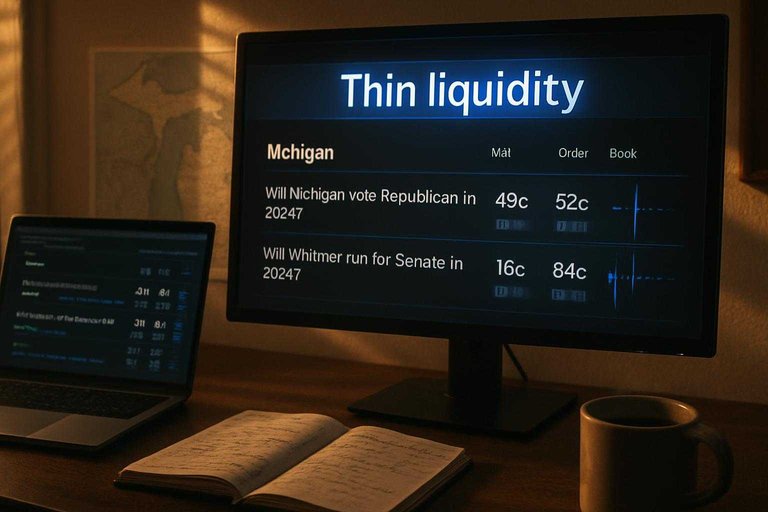
Michigan watchers get misled when the book is thin and the story is loud. A few traders can move price fast when there’s not much depth.
Coordinated trading also happens. Sometimes it’s persuasion, sometimes it’s hedging, and sometimes it’s just a whale getting cute.
The real killer is settlement ambiguity. If you can argue the outcome on a technicality, the market isn’t forecasting anymore.
Watchlist at a glance
Use this table to compare markets fast, then pick two or three to track weekly. Liquidity and settlement rules matter more than clever takes.
| Market (platform) | Contract type | Settlement trigger | Liquidity signal | Edge / caveat | Best monitoring cadence |
|---|---|---|---|---|---|
| Polymarket | Winner (Yes/No) | Official primary winner | Tight spread | Crypto rails | Daily near debates |
| PredictIt | Winner (Yes/No) | Platform rules + results | Share volume | Retail crowd | 2–3x weekly |
| Kalshi | Winner (Yes/No) | Exchange settlement terms | Order book depth | Regulated venue | Weekly, then daily |
| Manifold | Play-money market | Resolver + criteria | Active traders | Community bias | Weekly pulse |
| Augur-style DEX | Winner (Yes/No) | Oracle resolution | On-chain volume | Oracle risk | Daily if liquid |
| Betfair Exchange | Back/Lay winner | Payout on winner | Matched betting | Access varies | Daily near filing |
| Smarkets | Exchange winner | Market settlement rules | Market depth | Thin off-cycle | Weekly unless moving |
If you can’t explain the settlement trigger, you’re not trading a forecast. You’re trading a surprise.
1) Kalshi contracts
Kalshi is watched because it turns election expectations into a tradable price, updated in real time. Before you treat that price like a forecast, read the contract like a lawyer: scope, trading window, and settlement source.
Contract fit
A Kalshi market is only useful if its wording matches the question you’re actually asking. Michigan primaries get tricky fast because “who wins” and “what happens politically” are different bets.
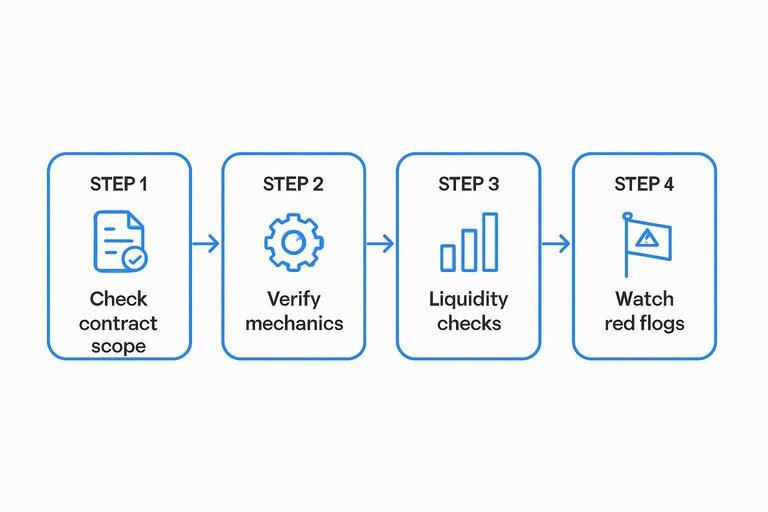
Check the contract scope first:
- Nominee markets: “Who wins the primary” style outcomes.
- Vote-share markets: thresholds like “Candidate X gets ≥ Y%.”
- Party-control markets: downstream general-election control, not the primary.
Then verify the mechanics:
- Trading hours and any pre-close rules.
- Settlement source and what counts as “official.”
- Edge cases like recounts, withdrawals, or disqualifications.
Pick the scope that matches your decision, not the headline you want. (For a concrete example of how these are defined, see this election-style contract filing.
Liquidity checks
Kalshi prices move on trades, not vibes. In thin Michigan state-race markets, microstructure matters more than your model.
- Tight bid-ask spread
- Visible depth on both sides
- Recent trades at multiple sizes
- Stable pricing after news
- Low impact from single prints
If the tape is quiet, treat the price like an opinion, not a signal.
When it misleads
Kalshi can mislead when participation is low and one trader sets the tone. That’s common in state-level races where fewer people bother to trade.
Watch for red flags:
- A sudden jump with no sustained follow-through.
- A wide spread that makes “the price” ambiguous.
- Settlement ambiguity, where the “official” source lags or changes.
When a single order can move the market, you’re seeing positioning, not collective wisdom.
2) PredictIt markets
PredictIt-style markets are useful when you want direction, not precision. They aggregate fast reactions to news, but Michigan-specific nuance often leaks in slowly. Treat them like a signal light, not a speedometer.
Michigan relevance
National contracts can still move before Michigan chatter does. They’re often the first place you’ll see risk-on or risk-off sentiment about party strength and candidate archetypes.
Use them like this:
- Watch “party nominee” pricing as a base-rate anchor.
- Compare “generic nominee” markets to named-candidate markets.
- Map national narrative shifts to Michigan-specific catalysts.
- Ignore them when Michigan is candidate-driven, not mood-driven.
If Michigan is about one local figure, national contracts will miss the turn.
Fee and cap effects
These markets aren’t frictionless, and the frictions matter. When fees, caps, and thin participation collide, prices can look confident while staying wrong.
Common distortions to expect:
- Fees widen the “true” fair-value range.
- Position limits reduce arbitrage pressure.
- Small trader pools amplify one loud narrative.
- Liquidity cliffs create slow, sticky prices.
When you see a stubborn price, assume structure before you assume insight.
Practical monitoring
Build a simple routine so you catch the meaningful moves. You’re looking for regime changes, not every tick.
- Set rough bands (e.g., leader, pack, long-shot) and track daily closes.
- Flag sudden repricings and write down the triggering headline.
- Cross-check against filings, ballot access, and committee announcements.
- Log endorsements and major staffing hires as “fundamentals” updates.
- Compare the move to other markets to spot isolated mispricing.
Your edge is consistency: the notes you keep become the model you trust.
3) Polymarket feeds
Polymarket-linked prices get quoted because they look precise and update fast. That speed is useful, but it also makes bad embeds and lazy reposts travel even faster.
Imagine a Michigan primary headline that cites “Candidate X at 62%.” If the underlying market is mislabeled, thin, or resolves on a quirky rule, that number is noise with a nice font.
Source verification
Check the market itself before you react to the clip. You’re verifying identity, rules, and tradability, not the vibe.
- Open the market on Polymarket, not a screenshot or aggregator card.
- Read the resolution criteria, including date, office, and party.
- Confirm the exact contract, since similar names get reused.
- Check liquidity and recent trades, not just the last price.
- Scan comments and linked sources for known ambiguities.
If you can’t verify those in under two minutes, don’t share the price.
Signal versus hype
Some moves are information. Others are narrative spikes that fade once traders get bored.
- Low volume prints move the line.
- Wide spreads signal weak agreement.
- One big trade, then silence.
- Price diverges from related contracts.
- News hits, price jumps, no follow-through.
When adjacent markets disagree, you’re watching story pressure, not conviction.
Use it safely
Treat Polymarket as a fast sentiment barometer, not a primary source. Pair it with ballot access rules, FEC filings, endorsements, and Michigan local reporting.
The safest workflow is “price suggests, reporting confirms.”
4) Manifold Markets
Manifold is where motivated locals turn news, rumors, and timing into tradeable bets. That can surface niche Michigan signals early, but you must price in thin liquidity and community bias.
Best scenarios
Use Manifold when you need local-knowledge triggers, not just a winner-take-all forecast.
- Candidate entry date becomes tradeable
- Endorsement timing sets a clear trigger
- Debate participation clarifies viability
- Fundraising milestone tests momentum
- Filing deadline forces commitment
Treat these as sensors for new information, not as final odds.
Calibration approach
Manifold prices can be sharp, but they can also be vibes-heavy.
- Match the market’s question wording to a poll’s exact outcome.
- Pull a reference probability from a larger, liquid market if available.
- Compare gaps, then ask what new information Manifold implies.
- Re-check after a news cycle to see if the gap closes.
- Keep a simple log of misses to spot systematic skew.
If Manifold leads reliably, use it for timing; if it lags, treat it as narrative.
When to ignore
Small markets break when the question is fuzzy or the crowd is asleep. Ignore markets with unresolved terms, long inactivity, or obvious single-user control.
If you can’t explain the price in one clean sentence, don’t trade it. (Manifold also explains how it structures sweepstakes-style questions for clearer resolution.)
5) Hypermind forecasts
Hypermind is closer to an expert-leaning forecast panel than a pure trading venue. You’re not reading a price formed by liquidity; you’re reading an aggregated belief shaped by forecasters and methodology.
For a Michigan Senate primary, these probabilities are most useful as a baseline for “if the race follows normal rules.” Use them to sanity-check hot takes, then stress-test the assumptions that would break them.
Forecast strengths
Hypermind-style aggregates shine when the race is driven by fundamentals, not headlines. They help when you need a disciplined view of candidate quality, resources, and turnout shape.
They tend to add the most value in these areas:
- Slow-moving incumbency and party mood
- Candidate quality and scandal risk
- Fundraising signal versus noise
- Turnout assumptions by cohort
- Consolidation in multi-candidate fields
Treat it like an anchor, then ask what shock would move it.
Checking trackability
Before you trust a probability, verify the question can be audited later.
- Check the exact office and party primary named.
- Confirm the end date matches primary day, not convention day.
- Find the resolution source, like Michigan SOS certified results.
- Read edge-case rules for withdrawals and replacements.
- Save a link or screenshot for later comparison.
If you can’t explain resolution in one sentence, don’t bet your narrative on it.
Known blind spots
Forecaster aggregates can be slow when the story changes faster than people update beliefs. That shows up when Michigan politics turns into a procedural fight, not a persuasion fight.
Watch for lag in situations like last-minute candidate switches, ballot access drama, or court rulings that change the field. Local ground-game shifts can also hit turnout before national observers notice.
When the race becomes legal or logistical, you need reporting, not just probabilities.
6) Metaculus questions
Metaculus-style questions are better for planning than betting. You’re not chasing a single number. You’re building a map of plausible paths through a messy primary.
Scenario building
Use conditional questions to model how the field could change. Then you can stress-test your assumptions before the next surprise headline.
- Write 3–5 “if-then” triggers you care about.
- Attach a forecast question to each trigger.
- Add a conditional follow-up: “If trigger happens, who leads?”
- Compare how answers shift across triggers.
- Save notes on what would change your mind.
You’re not predicting one future. You’re pricing multiple futures.
Interpreting aggregates
Community forecasts are aggregates, not oracles. Read the median as the crowd’s best single guess, and the interval as a measure of disagreement.
Scan the comments for concrete mechanisms and links, not vibes. Consensus can still be wrong when everyone shares the same blind spot.
Quality signals
Good questions attract good forecasters, and you can spot that quickly. Use these signals to avoid thin, noisy markets.
- Active comment threads with back-and-forth reasoning
- Clear resolution criteria and dates
- Sources linked in updates
- Revision history that evolves, not whipsaws
- Forecasters disagreeing for specific reasons
Treat quality like liquidity. Without it, the numbers don’t carry weight.
How to track and compare Michigan Senate primary markets across platforms
If you’re watching the michigan senate primary across multiple prediction venues, the hard part isn’t finding prices—it’s comparing them in a way that’s apples-to-apples. The same candidate can look “cheap” on one platform and “expensive” on another for reasons that have nothing to do with fundamentals: thin liquidity, different settlement rules, or stale quotes. Use a consistent checklist and rely on cross-platform stats (odds, volume, liquidity, open interest, and data freshness) to keep your read of the race grounded.
Below is a practical workflow you can use whenever the watchlist starts moving.
1) Start with liquidity, not the headline price
A price is only as meaningful as the market depth behind it. Before you treat any move as “information,” check whether the market can actually absorb size.
What to look at:
- Total liquidity / depth indicators: Prefer venues where spreads are tighter and size doesn’t instantly move the line.
- Open interest (if available): Helps distinguish an active market from one that briefly spiked on a few trades.
- Transaction activity: A handful of prints can create dramatic swings in thin books.
How to compare across platforms:
- Use the platform-level stats dashboards to see where overall activity is concentrated.
- If two platforms disagree sharply on odds, the one with meaningfully higher liquidity and activity is often the better “reference,” while the thinner venue can be a lagging or noisy signal.
2) Verify settlement terms before you compare contracts
“Michigan Senate primary winner” can mean different things depending on the platform’s contract definitions.
Checklist items to confirm:
- What exactly is being settled: party primary winner, nominee, or general-election winner.
- Edge cases: withdrawals, candidate replacement, party conventions, recounts, or disqualifications.
- Source of truth: which authority or official result determines settlement.
Practical tip:
- Don’t compare prices across platforms until you confirm they’re resolving on the same event. A tight-looking arbitrage can simply be mismatched settlement language.
3) Watch refresh timing and stale data traps
Cross-platform feeds rarely update at identical intervals. If a market is moving fast, you can end up comparing a fresh price on one venue to an older snapshot elsewhere.
How to handle it:
- Check “Last updated” timestamps and treat older quotes as informational only.
- Re-pull after major news before making conclusions about “divergence.”
- Use trends, not single ticks: a consistent drift over multiple refreshes is more meaningful than a one-off mismatch.
4) Separate real repricing from headline-driven distortions
Political markets often overreact to breaking headlines—especially in primaries where name recognition, endorsements, and rumors can create short-lived spikes.
Common distortion patterns:
- One-platform spikes: A venue with lower liquidity may overshoot on a headline, then mean-revert.
- Trending-feed amplification: When an event becomes “trending,” attention can pull prices away from where deeper markets sit.
- Narrative clustering: Prices can move in a tight window after an endorsement story even if the underlying race structure hasn’t changed.
How to sanity-check moves:
- Compare the move against cross-platform volume and liquidity: big price changes on low activity are more likely to be noise.
- Look for confirmation across venues: when multiple liquid platforms move in the same direction over several updates, it’s more likely to be durable repricing.
5) Use a simple comparison routine (repeatable in 2 minutes)
When you check the watchlist, run the same short routine each time:
- Confirm contract scope (primary vs nominee vs general; exact settlement language).
- Sort by activity (volume and liquidity first, then price).
- Check data freshness (timestamps and whether one feed is lagging).
- Scan for outliers (a platform far from the pack) and ask: is it thin, stale, or genuinely leading?
- Re-check after the next refresh if the move appears headline-driven.
This keeps you from over-weighting a single print, a single venue, or a single news cycle when tracking the michigan senate primary across markets.
Set Up Your Watchlist and Read It Like a Pro
- Start with the “watchlist at a glance” table and pick 2–3 platforms you’ll check consistently (more sources isn’t better if you can’t follow them).
- For any market move you notice, verify contract wording first, then sanity-check liquidity/volume so you don’t mistake a thin trade for real information.
- Compare signals across platform types (regulated contracts vs. crypto feeds vs. forecast aggregators) and only upgrade your confidence when multiple sources move for the same reason.
- Keep a short log of what you think caused each major shift—when the narrative changes later, you’ll be able to tell insight from hindsight.