
 Best Platforms
 Live Odds








11 Sports Prediction Market Odds Limitations Worth Knowing in 2026
A case-study-style breakdown of sports prediction market odds limitations in 2026—how markets differ from sportsbooks, where liquidity and volume create false confidence, why news and settlement lag distort “truth,” and how correlation and manipulation risks affect decisions.
If you treat prediction market odds like a clean, real-time probability, you can end up overconfident at exactly the wrong moment. Prices can be right on average and still be wrong for you—because you’re trading a market microstructure, not just a game outcome.
This case study walks through 11 practical limitations that show up in real trading and forecasting: thin order books, whale-driven moves, latency to breaking news, messy settlement data, hidden correlations across positions, and the subtle ways markets can be gamed. You’ll leave with a checklist for reading odds more skeptically and acting more safely.
What Odds Miss
Prediction-market odds look clean because they are single numbers. Sports outcomes are messy because they are layered systems.
In 2026, APIs, aggregators, and regulated venues push prices everywhere. The limitation is not access. It’s interpretation.
Markets vs Sportsbooks
Prediction markets are trading venues where you buy and sell outcome shares. The price moves as participants react to information and each other.
A sportsbook line is a managed offer built around risk limits, customer behavior, and margin. A market price is a clearing point that can move on one motivated order.
Treat sportsbook lines as curated quotes. Treat market prices as live signals that need context.
When Odds Mislead
Prices can feel precise even when the inputs are brittle. Watch for the situations where a “best” number is just a momentary artifact.
- Thin volume masks real disagreement
- Fast news outruns order books
- Correlated games break independence
- Rule quirks distort settlement
- Incentives pull price from truth
If the number looks too stable, inspect the plumbing before you trust it.
Limitations Checklist
Use this as a fast map of what you should audit before treating odds as forecasts.
| Limitation | Category | What to check | Why it matters |
|---|---|---|---|
| Data latency | Data | Update cadence | Prices lag reality |
| Data quality | Data | Source conflicts | Bad inputs win |
| Thin liquidity | Microstructure | Depth, spread | Easy to move |
| Wide spreads | Microstructure | Best bid/ask | Entry costs high |
| Incentive distortion | Incentives | Hedging, promo flows | Price not belief |
The fastest way to get better forecasts is to score the market, not the team.
Liquidity Illusions
Low liquidity makes prediction-market odds look precise while behaving like wet paint. Prices jump, spreads widen, and your fill can invalidate the “just follow the odds” plan.
Thin Order Books
Odds only reflect the last tradable price, not the price you can actually get size at. In niche leagues or player props, one small order can push the market across a wide spread.
When depth is shallow, implied probability becomes a moving target:
- The best bid and ask can be far apart.
- The next levels can be tiny and sparse.
- Your order becomes the market, briefly.
Treat thin books like estimates, not signals you can blindly scale.
Whales Move Prices
A few large traders can dominate price action when participation is uneven. You need to recognize the common ways they reshape the tape.
- Lean on the book to signal fake conviction
- Stack orders to create “walls”
- Pull liquidity right before your fill
- Sweep levels with aggressive taker orders
- Hammer around news and lineup windows
If one account can move the price, the “market odds” are a negotiation, not a truth.
Slippage Reality
Quoted odds assume your entire stake fills at that price. In a thin book, your entry becomes an average of multiple worse levels.
- You see odds that look like value at the top of book.
- You place a marketable order for a modest stake.
- The first slice fills, then the rest walks the book.
- Your average entry price is worse than the quote.
- Your expected ROI shrinks, even if you were “right.”
Before you trust an edge, price it with your expected fill, not the headline odds.
Volume Isn’t Depth
High traded volume can come from churn, not from a resilient order book. A market can print lots of trades while still offering almost no size near the current price.
Imagine constant back-and-forth scalping at a single level, with everyone cancelling when price moves. The tape looks active, but the next tradable size is far away.
Watch depth snapshots near your entry, because volume alone can be pure theater.
Slow Truth Updates
Sports prediction markets price what traders know, not what’s true. When key details sit in private chats, paid feeds, or inside a venue, the tape updates late.
Fragmented data makes it worse. Even “public” news arrives in uneven bursts, then gets interpreted in waves.
News Latency
Injuries, lineup decisions, and beat reporting rarely hit everyone at once. Markets can’t digest what they can’t see, and they can’t trust what’s still ambiguous.
A typical lag chain looks like this:
- Beat reporter hints at “limited” in a reply
- Coach gives a vague pregame quote
- A lineup leak circulates in a private group
- Official status posts, then warmups confirm
If your source is later in the chain, you’re not “late.” You’re trading a different market.
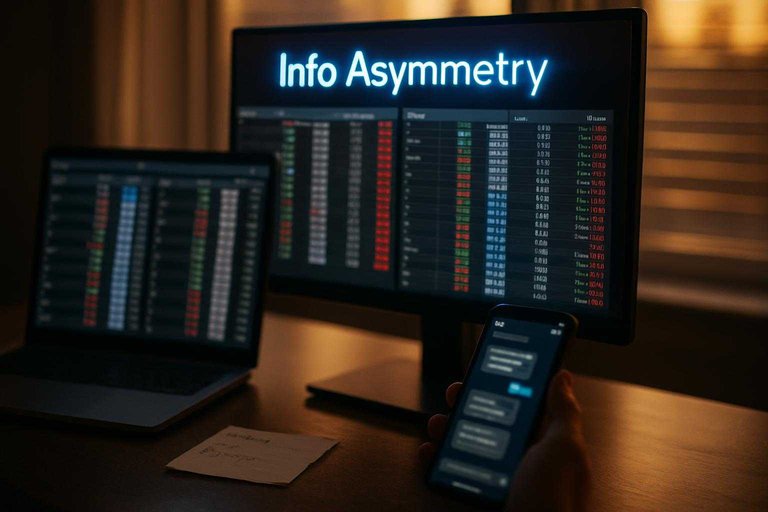
Info Asymmetry Sources
Edges often come from information that is technically obtainable, but unevenly distributed. Most of it is boring logistics and access.
- Local media nuances and translations
- Travel delays and arrival timing
- Coaching quotes and tone shifts
- Model feeds and faster injury tags
- Courtside or venue observation
If you don’t have similar access, size down or wait for confirmation.
Overreaction Cycles
Breaking news creates a vacuum, and vacuum gets filled with guesses. Early trades move the line hard, then follow-on context drags it back.
Imagine “star questionable” hits the feed without details. Some traders assume out, others assume decoy, and the price swings until warmups, beat follow-ups, or an official tag narrows outcomes.
Your job is to spot when the market is pricing uncertainty as certainty, then wait for the second wave. For more on how order-book microstructure and ingestion delays show up in practice, see this microstructure evidence from the Polymarket order book.
Bad Data Inputs
Bad inputs break prediction markets in the least fun way. Prices drift, then trades settle wrong, and everyone argues after the fact.
Imagine a prop market tied to one stat feed. A late stat correction flips the winner, and your “sure thing” becomes a dispute.
Settlement Ambiguity
Settlement rules look clean until sports gets weird. Postponements, overtime, and stat corrections create edge cases that force a definition.
Most platforms settle by a rulebook, not by vibes.
A few common edge cases:
- Postponed games that resume later, or restart entirely
- Overtime counting for some props, not others
- Canceled bets when players exit early
- Official stat corrections after initial posting
- “Game played” definitions for abandoned contests
If the market’s outcome definition is fuzzy, the price is a guess.
Feed Disagreements
Odds can be “right” on one feed and “wrong” on another. That gap shows up as mispricing, then turns into settlement drama.
- League feed differs from third-party feed
- Official stat changes arrive after settlement
- Event timestamps disagree across vendors
- Play reclassifications change counted stats
- Different refresh rates create stale numbers
If two feeds can disagree, your edge may be paperwork.
Dispute Time Costs
Disputes are a process, not a moment. Every hour in limbo is capital you cannot redeploy.
- Screenshot the market rules and the displayed line.
- Capture the relevant stat sources and timestamps.
- File the dispute with your evidence and a clear claim.
- Wait through the platform’s review and settlement window.
- Reconcile funds after the final ruling posts.
Locked collateral is a hidden fee, and it compounds when you trade often.
Trust Boundaries
When an edge case hits, “the oracle” becomes the product. Your model does not matter if the platform can reinterpret outcomes.
Oracles vary from single-source feeds to multi-source committees to operator discretion. Discretion can resolve rare scenarios fast, but it also adds governance risk.
You are not just betting on sports. You are betting on the platform’s decision boundary.
Correlation Traps
Assuming markets are independent works until you stack positions. In sports, many prices share the same hidden drivers, so your “diversified” slate can behave like one big parlay. That’s how small edges turn into lopsided, mispriced exposure.
Hidden Dependencies
Games and props often move together because they share causes, not because traders are sloppy. If you price each leg in isolation, you miss the common shock that hits them all.
Weather can compress scoring, tilt play-calling, and reshape every player prop tied to volume. Officiating tendencies can change foul rates, pace, and who sits in trouble, which spills into team totals and individual lines. Injuries ripple through usage, matchups, and substitution patterns, while playoff incentives change effort and rotation logic late in seasons.
If you can name a shared driver, you should assume correlation until proven otherwise.
Portfolio Risk
Correlation hurts most when your positions look different but depend on the same outcome. You feel spread out. You’re not.
- Multiple markets on one team across the slate
- Same-game props tied to pace and usage
- Conference futures stacked on one contender
- “Hedges” that share the same injury risk
- Opposing positions that fail under one scenario
The tell is one piece of news moving half your book at once.
Mitigation Habits
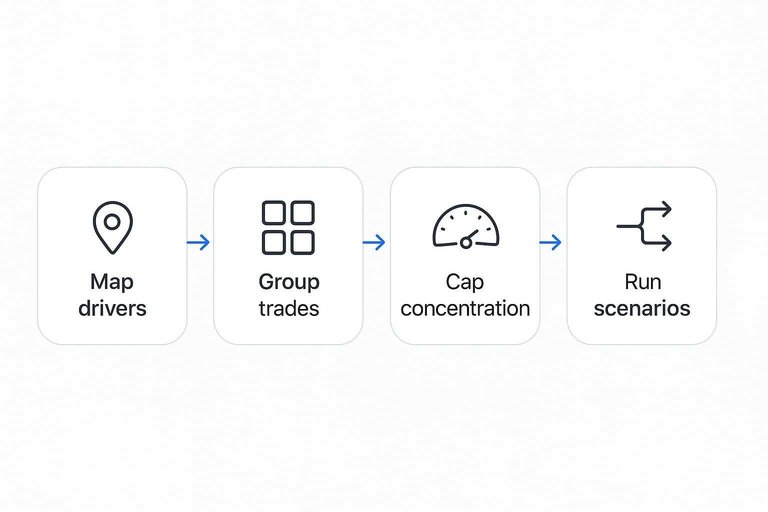
You can’t eliminate correlation, but you can stop being surprised by it. Treat it like risk management, not prediction.
- Map every position to its main drivers and failure modes.
- Group trades by team, game, and key shared variables.
- Cap concentration per driver, not just per market.
- Run “what if” scenarios for injury, weather, and lineup news.
- Recheck exposure after adds, not just before entry.
If a single headline can ruin your week, your sizing is the real price. If you want a simple refresher on what “event contracts” are in this ecosystem, the CFTC’s overview of prediction markets and event contracts is a useful reference.
Manipulation Surfaces
Prediction markets are easiest to distort where identity is thin and incentives are external. Pseudo-anonymous accounts can push signals that look like real conviction, then vanish.
The hard part is intent. The same footprint can be hedging, trolling, research, or a coordinated play.
Price Signaling
A trader can move odds to tell a story, not to hold risk. That story can sway fans, analysts, or automated systems watching the tape.
Imagine someone briefly buying an underdog up, then posting the screenshot. Or they nudge a thin market to trigger bots, then fade the move elsewhere.
If the payoff is outside the market, the “loss” is just marketing spend.
Gaming Market Rules
Markets have rules, and rules create edges for people who read them like contracts. The goal is to profit from mechanics, not predictions.
- Trade with yourself to print momentum
- Bait liquidity, then pull orders
- Time pushes around halts
- Exploit settlement wording ambiguity
When the rulebook is the weapon, “fair price” becomes optional.
Detection Limits
Market surveillance is usually weaker than sportsbooks because identity signals are thinner. Fewer KYC hooks means fewer reliable links between accounts, devices, and funding sources.
Coordination also hides in plain sight across venues. A move can start on one market, hedge on another, then get justified as “news.”
Without clean baselines, manipulation looks like normal noise until it’s too late.
Use Odds as Inputs, Not Answers
- Start with the “what could make this price wrong for me?” checklist: market vs sportsbook differences, thin liquidity, latency, settlement risk, and manipulation surfaces.
- Before you act, inspect depth and slippage, not just last price or headline volume—then size positions as if you may be forced to exit poorly.
- Track how quickly the market incorporates news and how often it overreacts, and assume someone else may have better information than you.
- Treat every portfolio as correlated until proven otherwise, and document your settlement and data-source assumptions so disputes don’t become your hidden edge case.