
 Best Platforms
 Live Odds








How to Track Next FIFA World Cup Odds: 7 Best Practices
A practical guide to tracking next FIFA World Cup odds with discipline and context—set up markets and cadence, use reputable sources, normalize formats, snapshot baselines, interpret line movement, and avoid common tracking traps like vig and headline chasing.

World Cup odds move for reasons that aren’t obvious when you only check a single sportsbook once in a while. Without a system, it’s easy to confuse noise for signal, miss meaningful shifts, or compare prices that aren’t actually comparable.
This guide gives you a repeatable way to track odds over time: which markets to follow, how often to log updates, how to standardize formats, and how to read line movement across books. You’ll also learn the common mistakes—like ignoring vig or mixing market types—that can quietly wreck your analysis.
Odds Tracking Setup
Odds move fast, but your tracking should stay boring and consistent. Define what you track, where you pull numbers from, and how you store each snapshot so comparisons stay clean months later.
Pick your markets
Pick markets that match your decisions, not your curiosity.
- Outright winner for long-horizon sentiment
- Group winner to reflect path risk
- Qualification odds to track progress
- Match odds for tactical shifts
- Player props only if actionable
If you can’t act on a market, don’t track it.
Choose time cadence
Use a cadence that matches information drops, not your mood.
- Check after every qualifier window closes.
- Check when preliminary squads get announced.
- Check after confirmed lineups and key injuries.
- Check after major travel, venue, or coaching news.
- Log an extra snapshot before matchday markets settle.
Your edge is consistency, not frequency.
Create a tracking sheet
Standardize fields so every odds pull is comparable.
| Sportsbook | Market | Timestamp | Odds format |
|---|---|---|---|
| Book name | Winner | UTC date-time | Decimal |
| Book name | Group | UTC date-time | American |
| Book name | Match | UTC date-time | Fractional |
| Book name | Qualify | UTC date-time | Decimal |
If the columns stay fixed, trends become obvious.
Set change thresholds
Not every tick matters, especially in liquid match markets. Define “meaningful” as a rule you follow, like a bigger move in implied probability, a line crossing a key number, or a shift that persists across multiple books.
Log alerts for moves that change your decision, and routine entries for everything else. That separation keeps your notes useful when the noise spikes.
Document assumptions
Odds are never context-free, and your comparisons shouldn’t be either. Write down what you assumed about venue, travel, lineup strength, rest days, and any tournament rule quirks that change incentives.
When the assumption breaks, your “odds move” might actually be your model catching up. That’s the line between signal and self-deception.
Use Reputable Sources
You’re tracking World Cup odds to spot real market movement, not rumor-driven noise. Your first job is filtering sources, because bad data creates confident mistakes.
- Prefer regulated sportsbooks with clear licensing details
- Cross-check with established odds aggregators for consistency
- Avoid thin markets with wide, jumpy price swings
- Ignore social “screenshots” without timestamps and links
- Save direct URLs so you can re-check later
Treat odds like financial prices: if you can’t verify the feed, you can’t trust the signal. For context on why regulated vs offshore books matters, see the CRS overview of regulated sports betting.
Normalize Odds Formats
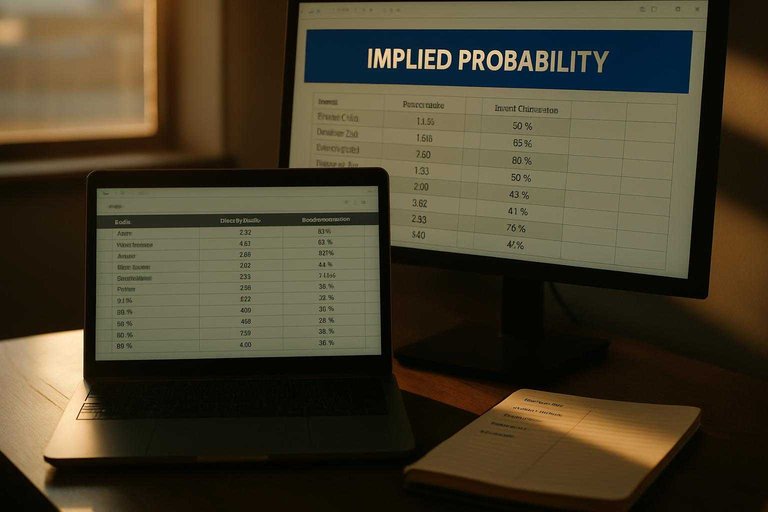
Converting every book to one odds format plus implied probability keeps your comparisons honest.
- Pick a single display format for your tracker, usually decimal.
- Convert each book’s odds into your chosen format using a consistent calculator or formula.
- Convert the same odds into implied probability for every line you track.
- Record the sportsbook, timestamp, market, and format used at capture time.
- Use implied probability as your comparison layer, not the raw odds.
Once everything speaks probability, price movement stops looking like noise and starts looking like signal.
Build a Baseline Snapshot
You need a clean starting snapshot before you can trust any “movement” you see later. Capture the same markets across several books on the same day, then track deltas to spot drift, steam, and reversions.
Imagine two books move Brazil while others stay flat. That’s signal, not noise.
Select reference books
Pick a small set of books you can monitor reliably, not every logo on an odds screen. Consistency beats coverage when you’re tracking changes over weeks.
- Choose 3–6 books you can access daily
- Prefer similar limits and bet types
- Note posting frequency and refresh cadence
- Record region, currency, and account constraints
- Stick with books you’ll keep long-term
If your sources change midstream, your “odds move” might be a source swap.
Log the openers
Openers anchor your whole comparison, so capture them the moment you can. Early numbers can be fragile, and small constraints matter.
- Record the first odds you see for each team and market.
- Capture timestamp, timezone, and your access region.
- Note limits, promos, boosts, or special rules shown.
- Save the raw format shown (decimal, fractional, American).
- Store a screenshot or export alongside the numbers.
When someone says “that team steamed,” you’ll know compared to what.
Add consensus view
A single-book baseline is easy to misread. Build a simple consensus line so you can separate broad market moves from one-book quirks.
Convert each book’s odds into implied probability, then take an average or median per team. Keep it simple at first, and stay consistent with the method.
Consensus becomes your ruler, and rulers make arguments boring. If you need a quick refresher on the math, use this guide to calculate implied probability.
Tag key events
Odds don’t move in a vacuum, and your future self won’t remember why they jumped. Add lightweight event tags so price changes have context.
- Qualifier results and standings shifts
- Group draw and bracket updates
- Coaching changes and tactical shifts
- Roster news, call-ups, suspensions
- Injuries and return timelines
Without tags, you’ll confuse information moves with randomness.
Version your data
Tracking odds is a time series problem, and time series break when files get overwritten. Keep versions so you can reproduce any comparison you publish.
Use dated exports, read-only snapshots, or a simple Git-style folder structure. Store both cleaned data and raw pulls, so you can re-check assumptions.
If you can’t recreate yesterday, you can’t trust tomorrow.
Read Line Movement
Line movement is only useful when you translate it into information flow. Track the price change, the implied probability change, and whether the whole market agreed. Do that, and you can separate real signal from book noise. For a deeper case study on comparing winner markets on equal footing, see 11 market metrics for 2026.
Steam vs drift
Steam is a fast, one-direction move across multiple books, usually triggered by sharp action or breaking news. A drift is a slow grind in one direction, often driven by steady public money or gradual model updates. A snap-back is a quick reversal after a move, often suggesting an overreaction or a limit-driven imbalance.
Treat steam as “someone knows,” and treat snap-backs as “the market is negotiating.”
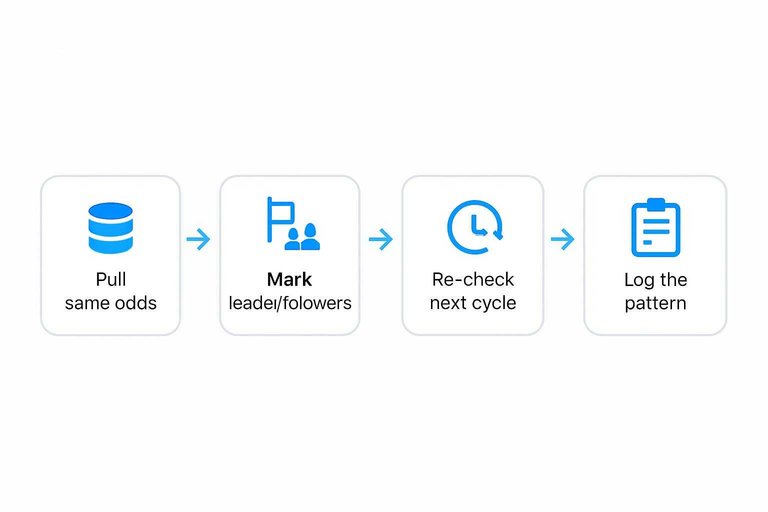
Compare across books
Check whether the market moved together or one book led.
- Pull the same odds from at least three books.
- Note the first timestamp where each book changed.
- Mark the leader, then list the followers.
- Re-check after the next major cycle or news window.
- Log the pattern, not your opinion.
When one book repeatedly leads, you just found your early-warning system.
Watch liquidity clues
Thin markets create fake confidence because prices jump on small bets.
- Watch for wide gaps between books.
- Flag abrupt jumps without intermediate prices.
- Note frequent reversals in short windows.
- Discount moves with tiny market coverage.
- Treat new listings as unstable.
If the line looks “jumpy,” read it like a rumor, not a report.
Use probability deltas
Odds moves aren’t comparable until you translate them into implied probability. Convert each price to implied probability, then measure the delta between the two timestamps. That lets you compare a favorite’s small-looking shift to a longshot’s huge-looking swing.
Track the delta, not the drama.
Note timing effects
Some “moves” happen because books update on schedules, not because new information hit the market. Time zones, weekend staffing, and posting cadence can create step-changes that look meaningful on a chart. If the move clusters around routine update windows, treat it as bookkeeping first.
Before you chase the line, check the clock.
Avoid Tracking Traps
Odds tracking fails when you treat every twitch like signal. Markets move for many reasons, and some are pure noise. Build guardrails, or you’ll end up tracking your own bias.
Chasing headlines
Big news hits fast, but prices often lie at first. Verify the story, then wait for the market to agree before you react.
- Confirm the news from two independent sources.
- Check the timestamp and whether details changed.
- Note the first odds move, then wait for a second update.
- Compare at least two books before logging it.
- Treat it as real only after a stable reprice.
Your job isn’t to be first. It’s to be right about what the market actually accepted.
Ignoring hold and vig
A price can “move” because the bookmaker changed margin, not belief. Watch the overround, then compare no-vig probabilities before you decide who strengthened.
Imagine Team A shortens slightly, but the book’s hold also rises. That can create a fake signal where both sides look worse in fair terms. Strip vig, then compare the implied probabilities across snapshots.
If you don’t de-vig, you’re tracking the house edge, not the market view.
Mixing market types
Different markets encode different risks, timelines, and information. Keep them separate, or you’ll compare apples to lightning.
- Track futures and match odds in separate sheets.
- Separate 1X2 from Asian handicap markets.
- Separate totals from team totals.
- Isolate props from main markets.
- Compare like for like across books.
Clean categories make movement interpretable. Messy ones make you chase ghosts.
Overreacting to one book
One book can move for internal reasons, not public information. Require corroboration, and check whether the “move” was even tradable.
Use a quick checklist. Did other books follow within a reasonable window? Were limits normal, or was max stake tiny? Was the book known to post early lines and adjust aggressively?
If the price wasn’t meaningfully bettable, it’s often a hint, not a signal.
Forgetting withdrawals
Markets get pulled, and that breaks your time series. A repost can look like movement when it’s really a reset.
Log every suspension and repost with a note on why it happened. After reposting, treat the new line as a new reference point, not a continuation. Also flag books that routinely pull first, then re-open sharper.
When you track pulls, you stop mistaking downtime for direction.
Track Odds Over Time With a Simple Spreadsheet Workflow
If you want to follow the next fifa world cup market without constantly re-learning “where the line was,” set up a lightweight system that captures prices the same way every time. The goal isn’t fancy tooling—it’s consistency: same fields, same cadence, and a quick way to spot meaningful drift.
A spreadsheet is enough for most bettors. If you outgrow it, the exact same structure can be moved into a small database later (Airtable, Notion, or a simple SQL table) without changing your process.
Create a clean data table (one row per observation)
Start with a single table where each row is one odds pull for one market at one moment. Avoid mixing notes and calculations into the raw table—keep it “append-only” so you can audit what you captured.
Recommended columns:
- Timestamp (UTC): the moment you recorded the odds
- Book/Exchange: where the number came from
- Market: e.g., Winner, Group Winner, To Reach Final
- Selection: team/country name (use one consistent spelling)
- Odds (Decimal): store in decimal even if you view in another format
- Implied Probability: calculated from decimal odds
- Event Stage/Context (optional): qualifier window, draw complete, roster news, etc.
- Notes (optional): brief tag like “lineup rumor” or “injury confirmed”
This structure lets you filter by team, compare books, and chart movement without rebuilding your sheet each time.
Set a capture cadence and stick to it
Odds can move quickly, but you don’t need to record every tick to get value from tracking. Pick a rhythm that matches how you bet and how often the market actually changes.
Common approaches:
- Daily quick pull during active news cycles (major injuries, coaching changes, qualification swings)
- Weekly snapshot during quieter periods
- Event-driven pulls after known catalysts (draw, qualification results, roster announcements)
Consistency matters more than frequency. A clean weekly series beats a messy collection of random screenshots.
Automate calculations: implied probability, overround, and “best price”
Once odds are stored in decimal, you can compute the rest reliably.
- Implied Probability:
=1/DecimalOdds - Overround (if you’re tracking a full market at one book): sum implied probabilities across all selections, then compare to 1 to understand the margin.
- Best Available Price (by selection): pull the max decimal odds across books for the same timestamp window.
Keeping these as formula columns (not manually typed) reduces errors and makes your charts trustworthy.
Visualize movement with a few simple charts
Charts turn a long log into an instant read. You don’t need a dashboard—just a handful of views you can refresh.
Useful chart setups:
- Line chart by selection: decimal odds (or implied probability) over time for one team
- Overlay chart across books: same selection, multiple lines (one per book) to spot stale numbers or outliers
- Spread chart: best price minus worst price across books over time to see when shopping matters most
Tip: consider charting implied probability instead of odds if you want a more intuitive “chance over time” view, especially when odds are long.
Add alerts so monitoring doesn’t become a chore
If you’re manually checking every day, you’ll eventually miss the moment that mattered. Use lightweight alerts tied to your table.
Examples:
- Threshold alert: notify when a selection crosses a target implied probability or odds level
- Change alert: flag when odds move more than a set percentage since your last snapshot
- Discrepancy alert: flag when one book differs materially from the rest (potential stale line)
In spreadsheets, this can be as simple as conditional formatting plus a “Today vs Last” column you filter by. In database tools, you can trigger notifications on rule-based changes.
Track CLV to evaluate your process (not just your picks)
Closing Line Value (CLV) is a practical way to measure whether your entries were priced well relative to later market consensus—without relying on outcomes.
A simple workflow:
- Record your bet in a separate “Bets” tab: timestamp, book, selection, odds taken, stake (optional).
- Define a reference close for the same market (for outrights, choose a consistent “comparison time,” such as a fixed weekly close or a standardized pre-tournament snapshot).
- Compute CLV using implied probability:
CLV = (ImpliedProb_Close - ImpliedProb_Taken)- Positive CLV means the market later moved in your favor (generally good); negative CLV means you likely paid a premium.
For long-horizon markets like the next fifa world cup outrights, “closing” is less clear than a match kickoff. The key is consistency: use the same reference point every time so your CLV trend is comparable.
Keep the system maintainable
A tracking setup only works if you’ll still use it months from now.
- Standardize names (e.g., “United States” vs “USA”) to avoid broken filters
- Separate raw data from analysis so you can append safely
- Version your assumptions (like your chosen “close” definition) in one place
- Back up periodically if the sheet becomes a long-running log
A simple, repeatable workflow will beat a complex model you stop updating.
Turn Odds Checking Into a Repeatable System
- Define your scope: markets to track, logging cadence, and clear change thresholds.
- Pull from reputable, consistent sources and normalize every price into one format (and implied probability).
- Create a baseline snapshot (openers, reference books, consensus view) and version updates around key events.
- Interpret movement by comparing across books, noting timing/liquidity clues, and accounting for vig—then log what you think changed and why before you act.
Frequently Asked Questions
- When do next FIFA World Cup odds first get posted, and why do they change so early?
- Next FIFA World Cup odds often appear well before the tournament because sportsbooks price long-term risk early and adjust as new information arrives (qualifying results, injuries, coaching changes, and major roster news). Early markets can move sharply because limits are smaller and fewer bets can shift the price.
- Are next FIFA World Cup odds the same as “to lift the trophy” futures, or are there different markets I should track?
- They’re usually the “tournament winner” (to win the World Cup), but books may also offer related futures like “to reach the final/semis,” “group winner,” or “top scorer,” which can behave differently. Track the specific market name and rules on each book to avoid comparing non-equivalent bets.
- How do I track next FIFA World Cup odds when teams haven’t qualified yet?
- Use “to qualify” markets and keep a separate watchlist for teams in contention, then switch to winner futures once the field is confirmed. If a book lists winner odds pre-qualification, verify whether the bet is “all-in” (void/refund rules vary) before logging it as comparable data.
- What’s the best way to compare next FIFA World Cup odds if I’m betting from a different country or using different sportsbooks?
- Compare prices across books available in your region and always note currency, odds format, and whether the market is regulated where you’re betting. If a major book isn’t accessible, use a reputable odds aggregator as a reference, but confirm any actionable price directly on the sportsbook.
- How can I tell if next FIFA World Cup odds have value without relying on hype or social media picks?
- Compare implied probability across multiple books and look for consistent mispricing (a team priced shorter/longer than the market consensus) rather than single-book spikes. Then sanity-check against fundamentals you can verify—qualification path, squad depth, and recent competitive performance—before treating it as value.