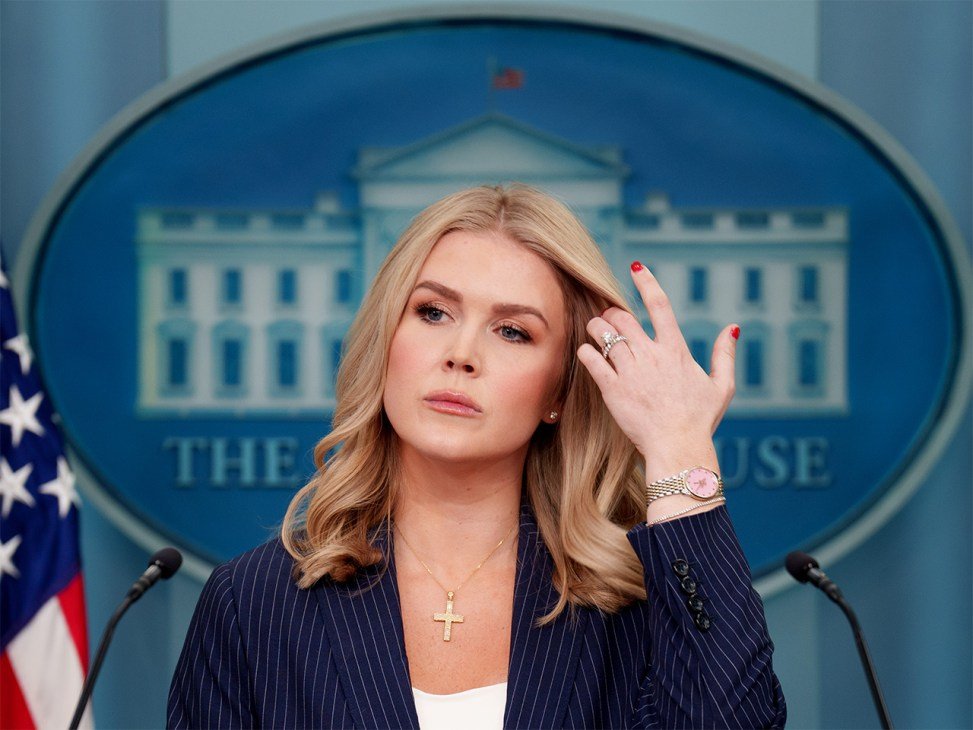

A single phrase in the next White House briefing can change how the administration's stance is reported and debated.
Whether Leavitt repeats charged terms or sticks to neutral policy language will shape media narratives and public perception of U.S. posture toward Iran, Gaza, allies, and Congress.

Karoline Leavitt, the White House press secretary, controls on-the-record wording and the decision to use or avoid controversial phrases.
Reporters, senior communications aides, national-security staff, and the president's political team all influence which words are approved and emphasized on camera.

Editorial choices, communications strategy, and legal or national-security vetting determine whether language is incendiary, colloquial, or measured.
Live questions from the press corps, rapid developments overseas, and real-time follow-ups can force repetition, clarification, or on-the-record corrections.

Listen for her opening lines and which nouns she emphasizes — mentions of Iran, Hamas, Hezbollah, Gulf states, or slogan-like phrases will indicate the briefing's frame.
Monitor the briefing transcript, pool reports, White House tweets, and any prebriefing leaks in the 24–48 hours before and immediately after the press briefing.


 Jun 16, 2026PolymarketKalshi
 Predicta
 Promo Code:
 $138,970 Vol.Jun 16, 2026


